Well Control Training Topics for IWCF and IADC Preparation
KickDrill covers 20 core well‑control subjects designed to help drillers, supervisors, and well‑control candidates prepare for IWCF and IADC certification. Each topic includes quizzes, explanations, and references to relevant API standards, giving users a structured way to build competence and confidence.
The subjects below represent the key knowledge areas required in modern well‑control training, including barrier philosophy, kick detection, hydrostatics, gas behavior, kill sheets, equipment, and operational procedures. Whether you are preparing for Level 2, Level 3, or Level 4 assessments, these topics form the foundation of safe and effective well‑control practice.
These subjects form the foundation of KickDrill’s well‑control learning system. By practicing across all topics, users gain a complete understanding of the principles required for safe drilling operations and formal certification.
This topic covers how different pressure effects arise during drilling and well kill operations. It includes ECD, SCR, floats in the string, casing pressure behavior, annular pressure losses, maximum allowable mud weight, and other pressure related considerations that influence well stability.
- Hydrostatic, Formation and Fracture Pressures
- Primary and Secondary Well Control
- General Well Control Equipment
A question that can be found under “Pressures and Limits”:
“We are circulating out a kick using the Weight and Weight method. After 200 of the 1338 strokes string capacity, we decide to increase the flowrate from 30 to 45 strokes. The SCR at 30 SPM was 32 and 46 up riser and choke respectively. Our stepdown chart calculated 3,4 Bar/100 Strokes and our FCP is 36.7 Bar. What will be our new expected Drillpipe pressure?.”
This subject explains barrier philosophy and the requirements for maintaining safe well operations. It covers primary and secondary barriers, when each is required, documentation needs, and the verification steps necessary to ensure barrier integrity.
- Well Barriers
- Barrier Concept
- Criterias for Barriers
- Equipment Acceptance Criterias
A question that can be found under “Barriers”:
“When shall a Well Barrier be tested? (4 answers)”
This topic focuses on risk awareness, hazard identification, and contingency planning during drilling operations. It highlights the importance of responsiveness, preparedness, and understanding how operational risks develop and how they should be mitigated.
- Operational drills
- Prepareness for unforseen events
- How to identify failures when circulating out an influx
A question that can be found under “Risk, Drills and Contingency Management”:
“According to API 59, 11.3.2; how often should a BOP drill be performed?”
This subject reviews the conditions that can lead to a kick, how to recognize abnormal trends, and what actions to take when risk indicating parameters appear. It emphasizes early detection and preventive decision making.
- How and why does a kick develop
- Lost circulation
- Effects from gas cut mud
- Surge and Swab effects
- Kicks caused by not following procedures during tripping
A question that can be found under “Causes of Kicks”:
“Our overbalance is 21 bar. The mud weight is 1.63 sg. How far theoretically could the fluid level drop before the well is in static underbalance? “
This topic covers the warning signs that may indicate hole instability or an influx. It explains how to interpret changes in pit volume, flow rate, torque, drag, and other operational signals that require immediate attention.
- Early Kick Detection
- Shallow Gas
- Top Hole Drilling
- Identification
A question that can be found under “Warnings and indicators”:
“For a kick to develop, some conditions need to be met: (select 3 answers)”
This subject covers scenarios involving Maximum Allowable Annular Surface Pressure, Slow Circulation Rates, and Leak Off Tests. These parameters form the basis for many well control calculations and operational decisions.
- Slow Circulation Rates (SCR)
- Issues around MAASP and Fracture pressures
- Leak Off Tests and Formation Integtity Tests
A question that can be found under “MAASP-SCR-LOT”:
“A fixed rig is placed at a waterdepth of 100 m. We need to calculate the setting depth for the conductor. The flow line is 20 m above the mean sea-level. The formationstrength is 0.154 bar/m calculated from seabed down. Sea-water gradient is 0.1007 bar/m. The plan is to drill out of the the conductor with 1.10 sg mud. What is the minimum setting depth (from RKB) for the conductor to prevent losses? Use nearest whole number.”
This topic explains how different types of influxes behave—water, oil, or gas—and how their behavior changes in water based versus oil based mud systems. It highlights migration, expansion, and other dynamic effects during well control events.
- Different types of influx and the physics around it
- Boyles law
- Kicks in horizontal wells
- Gas breakouts during circulation
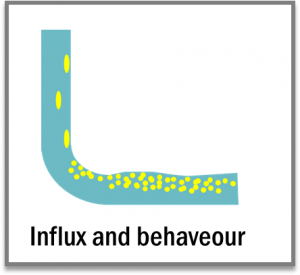
A question that can be found under “Influx and behaveour”:
“We have shut in a well in a long horizontal section after having taken a 800 liter kick in a 8 1/2″ section. The ROP has been slow. We have a float in the string and need to pump up the float to read off the SIDPP. We read 30 Bar on the Casing side. What pressure could we expect on the Drillpipe pressure gauge?”
This subject covers the differences between hard and soft shut in procedures during drilling and tripping operations. It explains when each method is appropriate and the steps required to safely secure the well.
- Configuration of lineups
- Monitoring pressures
- Shut-in methods during drilling and tripping
- Confirmation of the shut-in
- Hang off
- Limitations
- Float in string
- Interpretations of pressures
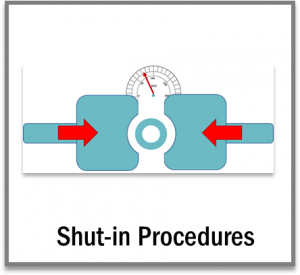
A question that can be found under “Shut-in Procedures”:
“In a well kill scenario; what type(s) of influx will expand in a shut in well?”
This topic reviews the three main well control methods: Driller’s Method, Wait and Weight, and Volumetric Control. It explains when each method is used and the principles behind their application.
- The different principles
- Drillers Method
- Weight and Wait
- Volumetric and Lubrication
- Choke Line Friction (SS)
- Stripping
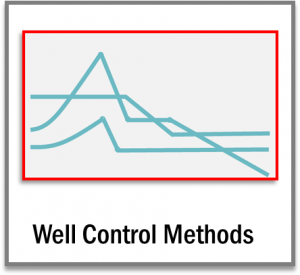
A question that can be found under “Well Control Methods”:
“The driller has pumped 300 strokes after starting the drillers method but increased the pump speed and thereby maintaining the ICP after having registered a leak in the lines just after the pump. What would this do with the Bottom Hole Pressure?”
This subject explains how to complete all sections of a kill sheet and provides worked examples. It includes kill sheet solutions for every input scenario presented on the KickDrill website.
- Inputs for sereral killsheets are given where candidate can fill out the complete sheet, also some additional tasks not part of the exam questions
- KMW-
- ICP
- FCP
- IDCP
- Stepdown
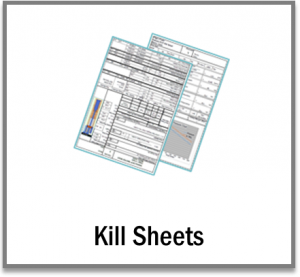
A question that can be found under “Kill Sheets”:
“Please see the atttached Image for SubSea well 12. Calculate:
KMW, ICP, FCP, IDCP, Stepdown/100 strk”
The Practice modules has examples from several KillSheet scenarios, and each Exam has questions from one spesific KillSheet scenario. The latter case scenarios may not be found in the Practice sessions for user challenge purposes.
This topic covers well control considerations during casing and cementing operations, including pressure effects, displacement risks, and operational precautions.
- Factors that need to be concidered when running casing and performing cementing operations
A question that can be found under “Casing and Cement”:
“We have cemented the cemented casing in place and are now Waiting on Cement (WOC). As the cement is hardening, how is the initial bottom hole pressure affected?”
This subject reviews the components and functions of blowout preventers. It includes questions related to BOP configuration, operation, and the role of each element in maintaining well control.
- Ram Types
- Annular Preventer
- Outlets
- Diverters
- Flanges and Gaskets
A question that can be found under “Blow Out Preventers”:
“Which Flanges with the following Ring Gaskets require periodic tigthening? (see image)”
This topic covers drill pipe safety valves, the choke manifold and its valves, and gas handling equipment such as the poorboy degasser and vacuum degasser.
- Safety Valves
- Chokes
- Degasser Equipment
A question that can be found under “Safety Valves, Choke and Gas Equipment”:
“We are drilling and current depth is 2370m. The driller registers an increase in flow. He picks of bottom and shuts in the well on the annular preventer. There is a float in the drillstring. He notes down the pressures which then reads zero pressure on the Drillpipe and 37 Bar on the casing side. What is the correct procedure to do to obtain DP pressure?”
This subject explains the requirements for testing well control equipment, including pressure tests, function tests, and regulatory expectations for verification.
- Test requirements
- Pressure Testing
- Function Testing
- Limitations, frequencies and requirements
A question that can be found under “Testing”:
“The BOP components shall be pressure tested to a stable test pressure that is maintained for a minimum of how many minutes with no visible leak (with reference to API)?”
This topic focuses on traditional hydraulic BOP control systems and introduces MUX and hydro electric systems. It explains how control systems operate and how they influence well control response time.
- General principles and functions
- Operating Pressures
- Problem identificaton
- Confirmation of functions
- Accumulators
A question that can be found under “Control System”:
“To connect the riser to the LMRP and the BOP to the wellhead we use a special connector. This is controlled by hydraulic pressure activated through the BOP panel. What is the maximum unlatch time for this connector?”
This subject covers troubleshooting scenarios where BOP components do not respond as expected. It teaches how to identify likely causes and determine corrective actions.
Several situations are given where the user will interpret the signals seen in the Control System. An image of the Control system key parameters are given and the user selects the most likly cause of the problem.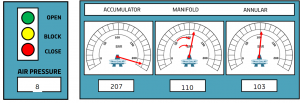
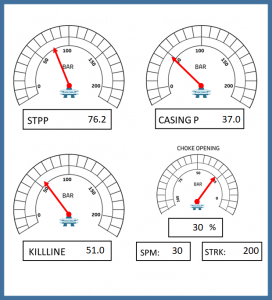
This topic presents a scenario where a kick is circulated out of the well. It guides the user through interpreting pressures and volumes at different stages of the circulation process.
As the kick is circulated out, several things can happen. The choke can plug, the pumps can stop, you can loose a jet etc. During the circulation you may also have built too much overpressure or have moved into underbalance and will need to adjust. The app will run through several of these scenarios and guide you through to the right answer. These questions are asked in the right sequence starting with “starting to circulate” and will continue until the influx is circulated out past the choke. Several problems are given on the way . Each exam has one Circulating Out scenario from one spesific case.
This subject includes additional well control concepts that may not appear in standard exams but are still operationally important. Topics include the volumetric method, negative pressure tests, kick tolerance, and usable accumulator volume.
- Calculating Kick Tolerance:
- The KickDrill App explains this issue further and gives an example of how to calculate Kick Tolerance. Can be used as a template for calculating KT on your well.
- Volumetric method when SIDPP is not available
- Case scenario of time taken and volume required to evacuate out gas when SIDPP is not available
- Calculating required Depth and amount of test fluid required during a Negative Pressure Inflow Test
- Usually not given at exams but the app goes through a case scenario

This topic covers emergency systems such as Emergency Disconnect, Deadman, and Autoshear. It explains when these systems activate and how they protect personnel and equipment during critical events.